
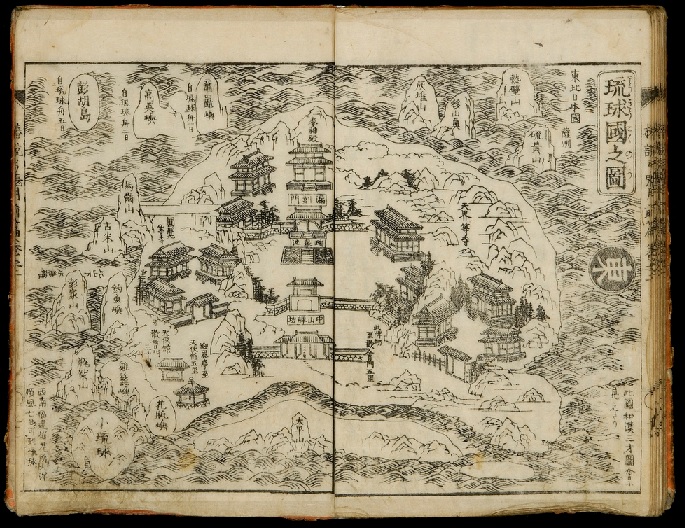
釣魚嶼の描かれた「琉球國之圖」と続きの頁。
江戸時代、曲亭馬琴の生きた(文化年間1807-11)の人々の認識では、尖閣が琉球に属することの他、流虬(りゅうきゅう)は神功皇后の時代に貢物を大和朝廷に献じていて日本と交流があったらしい。
In the Edo period, when Kyokutei Bakin lived (1807-11 during the Bunka era), people were aware that the Senkaku Islands belonged to the Ryukyu Islands, and that Ryukyu had offered tribute to the Yamato court during the reign of Empress Jingu and had exchanges with Japan.
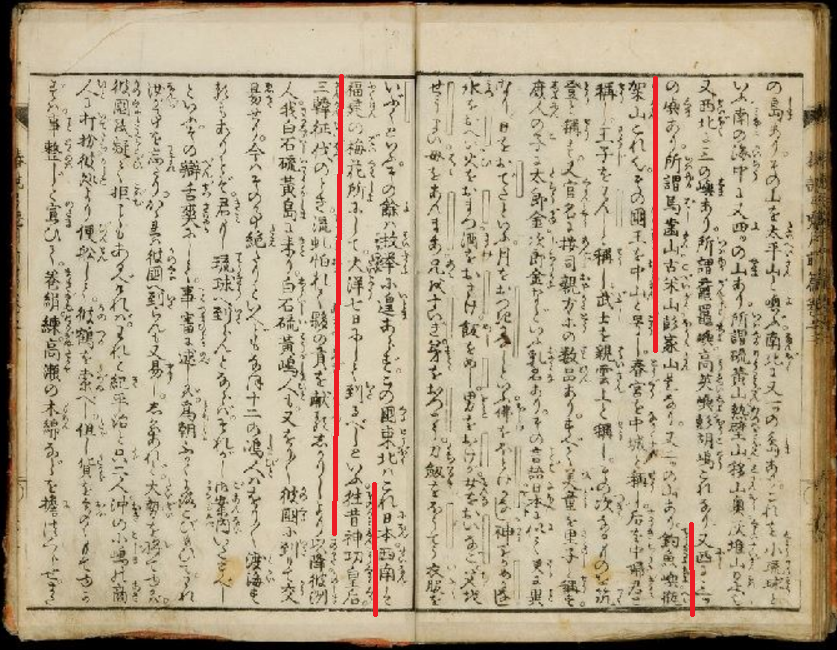
神功皇后云々の記載は置くとして、歴史マニアなら、硫黄山が戦国時代の諸大名が当時の最新兵器鉄砲を扱うために必要な良質の硫黄を産することで有名だったと知っているだろう。この硫黄山と硫黄は保元物語にも出てくる。為朝が生きていた時代(1139-1170)には広く知られた島(薩摩領)であり、産物なのである。硫黄を介した貿易は薩摩から琉球、チャイナの海岸線、遠くカンボジア、タイまで及んでいた。日本へは東南アジアから(鉄砲用の)鉛を輸入していた。
この圖に描かれている島々は台湾(小琉球)も含めて、当時(文化年間)の日本人にとっての琉球國と言う認識であったと考えられる。
上記は、2015年7月26日にFBに投稿したものを一部手直ししたものである。
Leaving aside the mention of Empress Jingu, history buffs will know that Iwo Jima(Satsuma territory) was famous for producing the high-quality sulfur needed by feudal lords during the Sengoku period to use the latest weapons of the time, firearms.
This mountain and sulfur are mentioned in the Tale of Hogen. During Tametomo's lifetim(1139-1170), the island was well known, and sulfur was its product.
Trade involving sulfur extended from Satsuma to the Ryukyu Islands, along the coastline of China, and as far as Cambodia and Thailand. Japan imported lead (for guns) from Southeast Asia.
The islands depicted in this map, including Taiwan (小琉球=Little Ryukyu), are thought to have been recognized as the Ryukyu Kingdom by the Japanese at the time (during the Bunka era).
